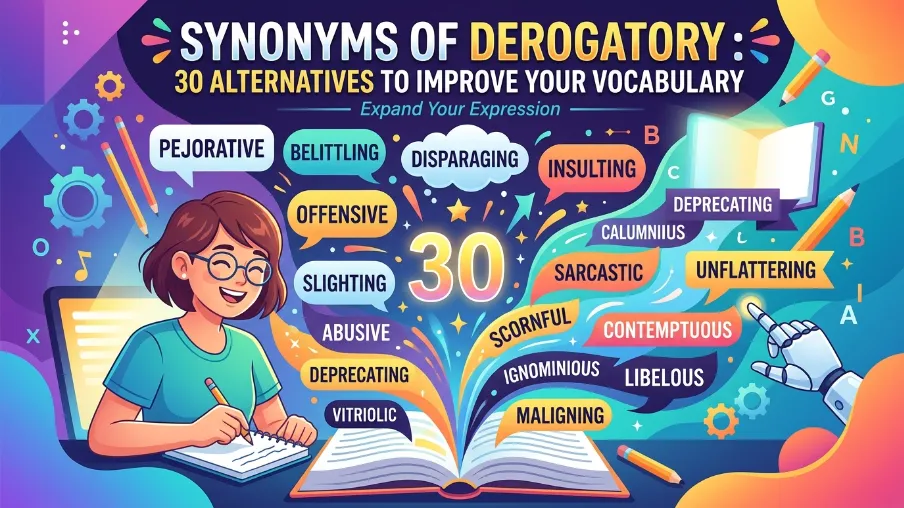
Derogatory is a word that carries a sharp edge. Imagine you are sitting with friends when someone makes a comment about your accent, your background, or the way you dress. The room goes quiet. That comment the one that stings without being a direct insult is exactly what derogatory means. It refers to something said or written that shows disrespect or lowers someone’s reputation or dignity. This word is widely used in news articles, academic writing, courtrooms, and everyday conversations.
For English learners and content writers, learning synonyms of derogatory is not just useful it is essential. Using the same word again and again makes your writing feel flat and repetitive. Synonyms allow you to match the exact emotional tone your writing needs. Some synonyms feel more formal, others more casual. Some are mild; others hit harder.
This article covers the full meaning of derogatory including its definition, examples, connotative tone, etymology, pronunciation in both American and British English, syllable breakdown, and affixation pattern. Then it presents 30 powerful synonyms, each with IPA pronunciation, meaning, and two example sentences. Finally, it includes prototype meaning, semantic categories, antonyms, and a short Q&A to make everything clear and easy to remember.
Meaning of Derogatory
Definition
Derogatory (Adjective): A word or expression that is disrespectful, hurtful, or intended to make someone feel less important or worthy. It is used to describe language or behavior that degrades a person’s reputation, character, or identity.
Examples
- The teacher warned students never to use derogatory labels when describing classmates.
- His derogatory comments about her work made her feel invisible and undervalued.
Connotative Meaning
(Connotation refers to the emotional feeling or cultural association a word carries beyond its dictionary definition.)
- Positive tone: None . derogatory is almost never used in a positive context.
- Negative tone: Strong. The word signals harmful, disrespectful, or degrading intent. It triggers feelings of shame, anger, or hurt.
- Neutral tone: Occasionally used in academic or legal writing to label a type of language without personal judgment e.g., ‘The court ruled the term derogatory.’
Etymology
- Origin: Late Latin ‘derogatorius’, from ‘derogare’ meaning to diminish, detract, or take away from.
- Roots: ‘de’ (Latin prefix meaning down or away) + ‘rogare’ (Latin verb meaning to ask or propose).
- Old English (450–1100): The concept did not exist as a formal word. Insults and dishonor were described using Old English terms like ‘edwit’ (reproach) or ‘hosp’ (insult).
- Middle English (1100–1500): Latin and French influence entered English. Words like ‘despise’ and ‘contemn’ appeared, carrying similar meanings of looking down on someone.
- Modern English (1500–Present): ‘Derogatory’ entered formal English in the early 16th century. By the 18th and 19th centuries, it became common in legal, political, and literary writing to describe harmful language. Today it appears in journalism, social media discourse, diversity training, and courtrooms worldwide.
Pronunciation (US & UK — IPA)
US: /dɪˈrɒɡəˌtɔːrɪ/
UK: /dɪˈrɒɡətərɪ/
Syllables
de-rog-a-to-ry (5 syllables)
Affixation Pattern of Derogatory
- Root: ‘rog’ — from Latin ‘rogare’ (to ask, to propose)
- Prefix: ‘de-‘ — meaning down, away, or removal of
- Suffix: ‘-ory’ — an adjective-forming suffix meaning ‘relating to’ or ‘characterized by’
Word formations from ‘derogatory’:
- Derogate (verb) — to detract from or to lessen in value
- Derogation (noun) — the act of detracting from reputation
- Derogatorily (adverb) — in a derogatory manner
- Non-derogatory (adjective) — not intended to insult or harm
Synonyms of Derogatory
Below are 30 carefully chosen synonyms of derogatory. Each entry includes the part of speech, US and UK IPA pronunciation, a simple meaning, and two natural example sentences.
1. Offensive (Adjective)
US: /əˈfɛnsɪv/
UK: /əˈfɛnsɪv/
Meaning: Causing displeasure or resentment; insulting in a hurtful way.
Examples:
- His offensive remarks about her appearance upset the entire room.
- The comedian was banned for using offensive language on stage.
2. Insulting (Adjective)
US: /ɪnˈsʌltɪŋ/
UK: /ɪnˈsʌltɪŋ/
Meaning: Disrespectful and hurtful in speech or action.
Examples:
- She found his tone insulting and completely unnecessary.
- The manager’s insulting comments made employees feel worthless.
3. Disparaging (Adjective)
US: /dɪˈspærɪdʒɪŋ/
UK: /dɪˈspærɪdʒɪŋ/
Meaning: Showing a critical or disrespectful attitude toward someone or something.
Examples:
- He made disparaging remarks about her cultural background.
- The review was disparaging and offered no constructive feedback.
4. Demeaning (Adjective)
US: /dɪˈmiːnɪŋ/
UK: /dɪˈmiːnɪŋ/
Meaning: Causing someone to feel less worthy of respect or dignity.
Examples:
- Being forced to beg for basic supplies was demeaning for the workers.
- The demeaning nickname followed her throughout high school.
5. Contemptuous (Adjective)
US: /kənˈtɛmptʃuəs/
UK: /kənˈtɛmptʃuəs/
Meaning: Showing open disrespect or scorn toward someone.
Examples:
- He gave a contemptuous laugh when she shared her idea.
- Her contemptuous attitude made it impossible to work with her.
6. Pejorative (Adjective)
US: /pɪˈdʒɒrətɪv/
UK: /pɪˈdʒɔːrətɪv/
Meaning: Expressing disapproval or conveying a belittling sense about someone.
Examples:
- The word was used in a pejorative sense to mock his lifestyle.
- Pejorative labels can deeply damage a person’s self-esteem.
7. Belittling (Adjective)
US: /bɪˈlɪtlɪŋ/
UK: /bɪˈlɪtlɪŋ/
Meaning: Making someone feel small, unimportant, or worthless.
Examples:
- His belittling comments about her skills crushed her confidence.
- Parents should never use belittling language with their children.
8. Degrading (Adjective)
US: /dɪˈɡreɪdɪŋ/
UK: /dɪˈɡreɪdɪŋ/
Meaning: Treating someone in a way that strips them of dignity and worth.
Examples:
- The prisoners were subjected to degrading treatment.
- She refused to accept such a degrading job offer.
9. Abusive (Adjective)
US: /əˈbjuːsɪv/
UK: /əˈbjuːsɪv/
Meaning: Using harsh, cruel, or violent words or actions against someone.
Examples:
- The coach was fired for his abusive behavior toward athletes.
- No one should tolerate abusive language in the workplace.
10. Scornful (Adjective)
US: /ˈskɔːrnfəl/
UK: /ˈskɔːnfəl/
Meaning: Feeling or showing great contempt and lack of respect.
Examples:
- He gave her a scornful look when she raised her hand.
- Her scornful attitude drove away everyone who tried to help.
11. Derisive (Adjective)
US: /dɪˈraɪsɪv/
UK: /dɪˈraɪsɪv/
Meaning: Expressing mockery or ridicule toward a person or idea.
Examples:
- The derisive laughter in the crowd embarrassed him greatly.
- She responded with a derisive smirk instead of a real answer.
12. Condescending (Adjective)
US: /ˌkɒndɪˈsɛndɪŋ/
UK: /ˌkɒndɪˈsɛndɪŋ/
Meaning: Acting as if others are less intelligent or important than you.
Examples:
- His condescending tone made newcomers feel unwelcome.
- She gave a condescending smile and walked away without replying.
13. Humiliating (Adjective)
US: /hjuːˈmɪlɪeɪtɪŋ/
UK: /hjuːˈmɪlɪeɪtɪŋ/
Meaning: Causing deep shame or embarrassment to someone.
Examples:
- Being corrected in front of everyone was humiliating.
- She wrote about her humiliating experience in the essay.
14. Slighting (Adjective / Verb)
US: /ˈslaɪtɪŋ/
UK: /ˈslaɪtɪŋ/
Meaning: Treating someone as if they are unimportant or not worth attention.
Examples:
- His slighting comment about her project was completely uncalled for.
- She noticed the slighting tone in his email and replied firmly.
15. Disrespectful (Adjective)
US: /ˌdɪsrɪˈspɛktfəl/
UK: /ˌdɪsrɪˈspɛktfəl/
Meaning: Failing to show proper respect or courtesy to another person.
Examples:
- It is disrespectful to interrupt someone while they are speaking.
- The students were warned about disrespectful behavior in class.
16. Opprobrious (Adjective)
US: /əˈproʊbriəs/
UK: /əˈprəʊbriəs/
Meaning: Expressing strong public criticism or disgrace toward someone.
Examples:
- The politician faced opprobrious accusations after the scandal.
- Opprobrious language has no place in civilized debate.
17. Vituperative (Adjective)
US: /vɪˈtjuːpərətɪv/
UK: /vɪˈtjuːpərətɪv/
Meaning: Using bitter, sharp, and abusive language to criticize harshly.
Examples:
- His vituperative speech shocked even his most loyal supporters.
- The review was vituperative and left no room for positive feedback.
18. Contemptible (Adjective)
US: /kənˈtɛmptɪbəl/
UK: /kənˈtɛmptɪbəl/
Meaning: Deserving to be treated with scorn or low opinion.
Examples:
- His contemptible behavior in the meeting angered everyone.
- Spreading false rumors is a contemptible thing to do.
19. Derogative (Adjective)
US: /dɪˈrɒɡətɪv/
UK: /dɪˈrɒɡətɪv/
Meaning: Tending to lower the reputation or worth of a person or group.
Examples:
- The use of derogative labels harms community relationships.
- He avoided derogative terms in his writing to stay professional.
20. Depreciatory (Adjective)
US: /dɪˈpriːʃɪətərɪ/
UK: /dɪˈpriːʃɪətərɪ/
Meaning: Expressing a low or negative opinion of someone’s value or worth.
Examples:
- Her depreciatory comments about his culture were hurtful.
- The depreciatory tone of the report surprised its readers.
21. Aspersive (Adjective)
US: /əˈspɜːrsɪv/
UK: /əˈspɜːsɪv/
Meaning: Making false and damaging statements to harm a person’s reputation.
Examples:
- The aspersive article destroyed her career without evidence.
- Courts can punish aspersive speech that causes real harm.
22. Maligning (Verb / Adjective)
US: /məˈlaɪnɪŋ/
UK: /məˈlaɪnɪŋ/
Meaning: Speaking about someone in a harmful, unfair, or untruthful way.
Examples:
- He was tired of maligning gossip spreading through the office.
- Maligning a public figure without proof can lead to lawsuits.
23. Spiteful (Adjective)
US: /ˈspaɪtfəl/
UK: /ˈspaɪtfəl/
Meaning: Deliberately hurting or upsetting someone out of anger or envy.
Examples:
- Her spiteful words were designed to wound, not inform.
- He wrote a spiteful review just to damage her reputation.
24. Snide (Adjective)
US: /snaɪd/
UK: /snaɪd/
Meaning: Making indirect but clever comments that are sarcastic and disrespectful.
Examples:
- She made a snide remark about his haircut in front of the group.
- His snide humor was funny to some but hurtful to many.
25. Insolent (Adjective)
US: /ˈɪnsələnt/
UK: /ˈɪnsələnt/
Meaning: Showing rude and disrespectful boldness, especially to authority.
Examples:
- The insolent student was sent out of class for his behavior.
- Her insolent response shocked the interviewer.
26. Calumnious (Adjective)
US: /kəˈlʌmniəs/
UK: /kəˈlʌmniəs/
Meaning: Making false statements designed to damage someone’s character.
Examples:
- The calumnious blog post spread lies about the charity.
- He filed a lawsuit over the calumnious claims in the tabloid.
27. Injurious (Adjective)
US: /ɪnˈdʒʊərɪəs/
UK: /ɪnˈdʒʊərɪəs/
Meaning: Causing harm, damage, or offense to a person’s feelings or reputation.
Examples:
- The injurious comment damaged their friendship permanently.
- The judge ruled that the article contained injurious language.
28. Deprecatory (Adjective)
US: /ˈdɛprɪkətərɪ/
UK: /ˈdɛprɪkətərɪ/
Meaning: Expressing strong disapproval or criticism of a person or idea.
Examples:
- His deprecatory remarks about art showed his narrow views.
- The deprecatory tone of her letter surprised the committee.
29. Disdainful (Adjective)
US: /dɪsˈdeɪnfəl/
UK: /dɪsˈdeɪnfəl/
Meaning: Showing a strong feeling that someone is beneath your consideration.
Examples:
- He gave a disdainful glance at the cheaper product on the shelf.
- Her disdainful attitude made new colleagues feel unwanted.
30. Reproachful (Adjective)
US: /rɪˈproʊtʃfəl/
UK: /rɪˈprəʊtʃfəl/
Meaning: Expressing blame, disappointment, or moral disapproval toward someone.
Examples:
- Her reproachful look told him everything without a word.
- He sent a reproachful email after being left out of the meeting.
Prototype Meaning
When most people hear the word derogatory, they picture hurtful, dismissive language used against a person based on their identity, race, gender, or background. The most typical image is of a slur or an insult that targets a person’s core sense of self — something said not to inform but to wound. People associate this word with prejudice, discrimination, and public shame. In its prototype form, derogatory language is deliberate, targeting, and morally condemned by society.
Prototype Categorization
Grouping the 30 synonyms into categories helps writers choose the most precise word for every situation. Here are the main semantic groups:
- Formal / Academic: Pejorative, opprobrious, vituperative, calumnious, depreciatory, aspersive, deprecatory — use these in essays, legal writing, journalism, and academic papers.
- Emotional / Personal Hurt: Demeaning, humiliating, insulting, belittling, spiteful, snide, reproachful — use these when describing how words affect a person’s feelings.
- Social / Public Shame: Degrading, disrespectful, contemptible, contemptuous, scornful, disdainful — use these when addressing public behavior, workplace culture, or media conduct.
- Verbal Attack / Aggression: Abusive, derisive, maligning, injurious, insolent, offensive — use these to describe intentional verbal harm or hostile criticism.
- Subtle / Indirect Put-downs: Condescending, slighting, snide, disparaging, derogative — use these when the disrespect is implied rather than stated outright.
Understanding these categories makes your writing more precise, powerful, and natural. A journalist would choose ‘vituperative’ over ‘mean.’ A teacher might use ‘demeaning’ over ‘offensive.’ A lawyer might prefer ‘calumnious’ over ‘insulting.’ Matching the right synonym to the right context is what separates a good writer from a great one.
Antonyms of Derogatory
These words express the opposite of derogatory they carry respect, approval, and positive regard:
- Complimentary (Adjective) expressing praise or admiration; saying something kind and positive about a person.
- Respectful (Adjective) showing proper consideration and honor for another person’s feelings and dignity.
- Flattering (Adjective) making someone feel good about themselves; expressing admiration.
- Laudatory (Adjective) expressing strong praise and high approval; used in formal writing.
- Approving (Adjective) showing agreement, acceptance, or positive opinion about a person or idea.
- Appreciative (Adjective) showing gratitude and recognition for someone’s qualities or actions.
- Honorific (Adjective / Noun) showing respect through a title, form of address, or kind language.
- Eulogistic (Adjective) offering high praise, especially about someone’s character or achievements.
- Reverential (Adjective) showing deep respect and admiration, almost with a sense of awe.
- Deferential (Adjective) showing polite submission or humble respect for another person’s authority.
Short Questions and Answers
- What does derogatory mean? Derogatory describes language or behavior that is disrespectful, insulting, or intended to make someone feel less important, worthy, or respected. It is used when words target a person’s identity or reputation in a hurtful way.
- When should derogatory be used? Use derogatory when you want to label a word, phrase, or action as harmful and disrespectful especially when it relates to prejudice, discrimination, or verbal attacks. It is common in journalism, law, academic writing, and social commentary.
- Is derogatory positive or negative? Derogatory is almost always negative. It signals harmful intent or a damaging effect on someone’s dignity. Only in academic or legal contexts is it used in a neutral, descriptive way to classify a type of language without personal judgment.
- How is derogatory different from similar words? Derogatory is broader than insult (which is a direct attack) and more formal than offensive (which can include non-verbal behavior). Pejorative is the closest synonym both describe language that lowers a person’s status. However, derogatory often implies a social or moral dimension, especially in contexts of identity and discrimination, while pejorative is more about linguistic tone.
Conclusion
Learning the word derogatory and its 30 synonyms is a powerful step toward better English. It builds your vocabulary so you can name harmful language precisely. It strengthens your writing by giving you choices — formal words for essays, emotional words for personal narratives, and subtle words for nuanced conversations. It helps you avoid repetition and communicate with more confidence and clarity.
Every time you learn a new synonym, you add a new tool to your language toolkit. Whether you are a student, a writer, a teacher, or someone learning English as a second language, vocabulary growth never stops. Try using one new word from this list every day. Write a sentence. Say it out loud. Notice how it fits. Small daily practice builds lasting fluency.
Language is power. Use it wisely, respectfully, and with full awareness of the weight that words carry

I am Daniel Whitmore.I write about everyday English, common grammar mistakes, and word meanings. My goal is to make learning English simple, clear, and practical for everyone.