Language means a system of words, signs, or symbols used to communicate ideas and feelings.
Have you ever tried to talk to someone who speaks a different language? I remember meeting a traveler who didn’t understand my words, but we still managed to communicate using gestures and simple phrases. That moment showed me how powerful language really is.
The word language means a system we use to share ideas, thoughts, and feelings. It can be spoken, written, or even expressed through signs and symbols. Language connects people and helps us understand each other.
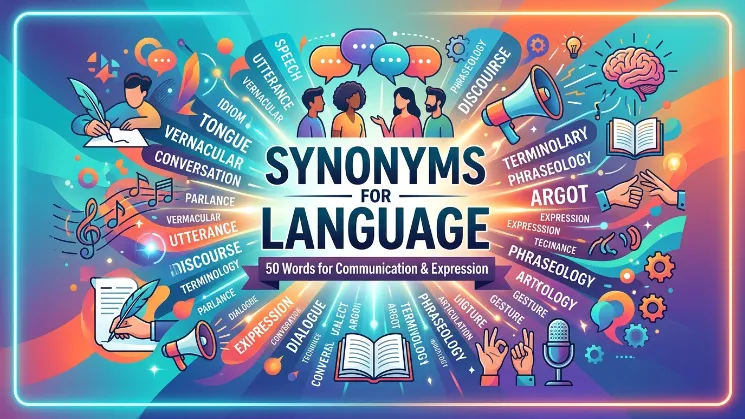
For students, bloggers, content writers, and everyday English users, learning synonyms for language is very useful. It helps you describe communication, expression, and systems of speaking in different ways. Using different words instead of repeating “language” makes your writing clearer, richer, and more engaging.
Speech
Meaning: Spoken words.
Examples:
His speech was clear.
She improved her speech.
Tongue
Meaning: A native language.
Examples:
English is his mother tongue.
She speaks many tongues.
Dialect
Meaning: A regional form of language.
Examples:
He speaks a local dialect.
The dialect is unique.
Lingo
Meaning: Informal language of a group.
Examples:
He uses tech lingo.
The lingo is hard to understand.
Jargon
Meaning: Special words of a profession.
Examples:
Medical jargon is complex.
He avoided jargon.
Terminology
Meaning: Set of specialized words.
Examples:
The terminology is technical.
He learned new terminology.
Vocabulary
Meaning: Words known by a person.
Examples:
Her vocabulary is strong.
He improved vocabulary.
Words
Meaning: Units of language.
Examples:
Choose your words wisely.
His words were kind.
Expression
Meaning: Way of conveying ideas.
Examples:
His expression is clear.
She improved expression.
Communication
Meaning: Sharing information.
Examples:
Good communication matters.
He improved communication.
Discourse
Meaning: Formal communication.
Examples:
The discourse was deep.
He joined the discourse.
Phraseology
Meaning: Style of wording.
Examples:
His phraseology is unique.
She improved phraseology.
Style
Meaning: Way of using language.
Examples:
His style is simple.
Her style is elegant.
Script
Meaning: Written form of language.
Examples:
The script is clear.
He studied script.
Writing
Meaning: Written language.
Examples:
Her writing is strong.
He practices writing.
Text
Meaning: Written words.
Examples:
The text is simple.
He read the text.
Prose
Meaning: Ordinary writing style.
Examples:
His prose is smooth.
She writes prose.
Voice
Meaning: Style of expression.
Examples:
His voice is unique.
She found her voice.
Idiom
Meaning: Expression with special meaning.
Examples:
He used an idiom.
The idiom is common.
Slang
Meaning: Informal words.
Examples:
Teenagers use slang.
He learned slang.
Accent
Meaning: Way of pronouncing words.
Examples:
He has a strong accent.
Her accent is clear.
Pronunciation
Meaning: Way of saying words.
Examples:
His pronunciation improved.
She practices pronunciation.
Grammar
Meaning: Rules of language.
Examples:
He studies grammar.
Her grammar is correct.
Syntax
Meaning: Sentence structure.
Examples:
Syntax is important.
He improved syntax.
Semantics
Meaning: Meaning of words.
Examples:
Semantics matters.
He studied semantics.
Linguistics
Meaning: Study of language.
Examples:
She studies linguistics.
Linguistics is complex.
Code
Meaning: System of communication.
Examples:
Language is a code.
He cracked the code.
Sign System
Meaning: Communication through signs.
Examples:
Sign language is a sign system.
He learned the system.
Symbol System
Meaning: Use of symbols to communicate.
Examples:
Language is a symbol system.
He studied symbols.
Medium
Meaning: Way of communication.
Examples:
Language is a medium.
He used this medium.
Channel
Meaning: Method of communication.
Examples:
Speech is a channel.
He used another channel.
Mode
Meaning: Way of expression.
Examples:
Writing is a mode.
He changed mode.
Register
Meaning: Style based on context.
Examples:
Formal register is used.
He changed register.
Form
Meaning: Structure of language.
Examples:
The form is simple.
He studied form.
System
Meaning: Organized method.
Examples:
Language is a system.
He learned the system.
Expression Style
Meaning: Way of expressing.
Examples:
His expression style is unique.
She improved style.
Word Choice
Meaning: Selection of words.
Examples:
Word choice matters.
He improved word choice.
Phrase
Meaning: Group of words.
Examples:
He used a phrase.
The phrase is common.
Utterance
Meaning: Spoken expression.
Examples:
His utterance was clear.
She made an utterance.
Statement
Meaning: Spoken or written sentence.
Examples:
He made a statement.
The statement was clear.
Expression System
Meaning: Way of communication.
Examples:
Language is expression system.
He studied it.
Lexicon
Meaning: Vocabulary of a language.
Examples:
His lexicon is wide.
She improved lexicon.
Verbal System
Meaning: Spoken communication system.
Examples:
Language is verbal system.
He learned it.
Communication System
Meaning: System to share ideas.
Examples:
Language is communication system.
He improved it.
Speech System
Meaning: Spoken language system.
Examples:
Speech system developed.
He studied it.
Writing System
Meaning: Written language system.
Examples:
The writing system is complex.
He learned it.
Sound System
Meaning: Phonetic structure.
Examples:
Language has sound system.
He studied sounds.
Expression Medium
Meaning: Tool of communication.
Examples:
Language is expression medium.
He used it.
Conclusion
Learning synonyms for language helps you describe communication, expression, and systems of speaking more clearly and creatively. These words improve writing, blogging, and everyday communication by adding variety and depth. Students, writers, and professionals can use these synonyms in essays, articles, and conversations to express ideas more effectively. Practice these words regularly to make your English more natural, engaging, and powerful.

I am Daniel Whitmore.I write about everyday English, common grammar mistakes, and word meanings. My goal is to make learning English simple, clear, and practical for everyone.