
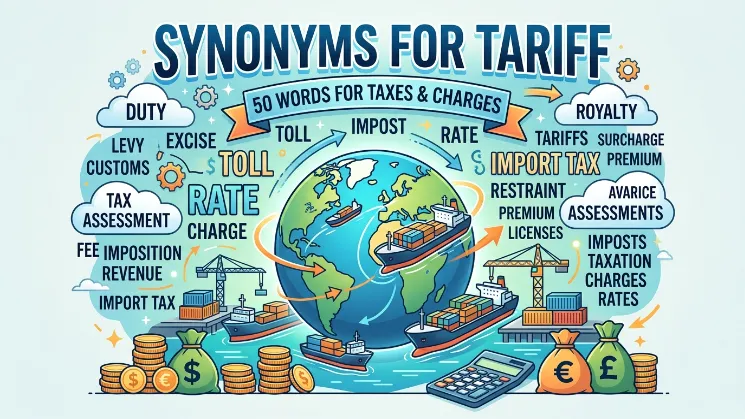
Tariff means a tax or duty placed on goods, especially when they are imported or exported between countries.
Have you ever noticed that some products become more expensive when they come from another country? I once saw a shop owner explain why imported items cost more than local ones. He said the government adds extra charges when goods enter the country. That extra cost is called a tariff.
The word tariff means a tax or duty placed on goods, especially in international trade. It is used by governments to control prices, protect local industries, or generate revenue. For students, bloggers, content writers, and everyday English users, learning synonyms for tariff is very helpful. It allows you to explain economic topics more clearly and avoid repeating the same word. Using different terms also makes your writing more professional and easier to understand.
Tax
Meaning: Money paid to the government.
Examples:
The government increased the tax on goods.
People must pay tax regularly.
Duty
Meaning: A government charge on imports or exports.
Examples:
Import duty was added to the product.
He paid duty at the border.
Levy
Meaning: An official charge or tax.
Examples:
The government imposed a levy.
A new levy increased prices.
Charge
Meaning: An amount of money to be paid.
Examples:
There is an extra charge on imports.
The company added a service charge.
Fee
Meaning: Payment for a service.
Examples:
He paid a customs fee.
There is a fee for processing goods.
Toll
Meaning: A charge for using a service or road.
Examples:
They paid a toll for transport.
The toll increased costs.
Customs
Meaning: Taxes on imported goods.
Examples:
Customs were high this year.
He paid customs at the airport.
Import Tax
Meaning: Tax on goods entering a country.
Examples:
Import tax made products expensive.
They reduced import tax.
Export Tax
Meaning: Tax on goods leaving a country.
Examples:
Export tax affected trade.
The company paid export tax.
Excise
Meaning: Tax on goods produced within a country.
Examples:
Excise duty increased prices.
The government raised excise.
Assessment
Meaning: Calculated amount of tax.
Examples:
Tax assessment was high.
He checked the assessment.
Surcharge
Meaning: Extra charge added to a cost.
Examples:
A surcharge was applied.
Fuel surcharge increased prices.
Impost
Meaning: A tax or duty.
Examples:
The impost affected imports.
They reduced the impost.
Contribution
Meaning: Money paid towards something.
Examples:
Businesses made a contribution.
The contribution increased costs.
Payment
Meaning: Money paid for something.
Examples:
Payment was required at entry.
He made the payment.
Dues
Meaning: Money owed or payable.
Examples:
All dues must be cleared.
He paid his dues.
Rate
Meaning: Fixed amount charged.
Examples:
The tariff rate increased.
Rates were revised.
Pricing
Meaning: Setting of cost.
Examples:
Pricing changed due to tariff.
The company adjusted pricing.
Cost
Meaning: Amount needed to buy something.
Examples:
The cost increased due to tariff.
High cost reduced demand.
Expense
Meaning: Money spent.
Examples:
Import expense increased.
The expense was high.
Price
Meaning: Amount to pay for goods.
Examples:
Prices went up due to tariff.
The price increased suddenly.
Valuation
Meaning: Determining value for tax.
Examples:
Valuation affected charges.
Goods underwent valuation.
Duty Fee
Meaning: Fee for customs duty.
Examples:
He paid duty fee at entry.
Duty fee was high.
Service Charge
Meaning: Extra payment for service.
Examples:
A service charge was added.
The charge increased total cost.
Import Duty
Meaning: Tax on imports.
Examples:
Import duty raised prices.
They paid import duty.
Export Duty
Meaning: Tax on exports.
Examples:
Export duty reduced profit.
The company paid export duty.
Tariff Rate
Meaning: Level of tariff applied.
Examples:
Tariff rate increased.
Rates were updated.
Government Tax
Meaning: Tax set by government.
Examples:
Government tax affected imports.
They paid government tax.
Trade Tax
Meaning: Tax related to trade.
Examples:
Trade tax increased costs.
Businesses paid trade tax.
Border Tax
Meaning: Tax at country borders.
Examples:
Border tax was applied.
He paid border tax.
Import Charge
Meaning: Cost added to imports.
Examples:
Import charge increased price.
They reduced import charge.
Export Charge
Meaning: Cost added to exports.
Examples:
Export charge reduced profit.
The company paid export charge.
Duty Rate
Meaning: Percentage of duty.
Examples:
Duty rate was high.
They lowered duty rate.
Trade Duty
Meaning: Duty related to trade goods.
Examples:
Trade duty affected sales.
He paid trade duty.
Fiscal Charge
Meaning: Government financial charge.
Examples:
Fiscal charge increased revenue.
The charge was applied.
Public Tax
Meaning: Tax collected for public use.
Examples:
Public tax funded services.
They paid public tax.
Revenue Charge
Meaning: Charge to generate income.
Examples:
Revenue charge was imposed.
It increased government income.
Commodity Tax
Meaning: Tax on goods.
Examples:
Commodity tax raised prices.
The tax affected demand.
Import Fee
Meaning: Fee for bringing goods in.
Examples:
Import fee was charged.
They paid import fee.
Export Fee
Meaning: Fee for sending goods out.
Examples:
Export fee reduced profit.
He paid export fee.
Additional Charge
Meaning: Extra payment added.
Examples:
An additional charge was applied.
It increased total cost.
Extra Cost
Meaning: More money needed.
Examples:
Tariff added extra cost.
The extra cost affected buyers.
Trade Charge
Meaning: Cost related to trade.
Examples:
Trade charge increased prices.
Businesses paid trade charge.
Import Cost
Meaning: Total cost of imports.
Examples:
Import cost increased.
They calculated import cost.
Export Cost
Meaning: Total cost of exports.
Examples:
Export cost reduced profit.
The company managed export cost.
Economic Charge
Meaning: Financial burden in economy.
Examples:
Economic charge increased prices.
It affected the market.
Market Charge
Meaning: Cost in the market.
Examples:
Market charge rose suddenly.
Buyers paid market charge.
Business Tax
Meaning: Tax on business activity.
Examples:
Business tax increased expenses.
Companies paid business tax.
Conclusion
Learning synonyms for tariff helps you understand economic topics better and improves your writing skills. These words allow you to explain taxes, trade, and pricing more clearly and professionally. Students, bloggers, and professionals can use these terms in essays, articles, and daily communication. Practice using these synonyms regularly, and your vocabulary will become stronger, more natural, and more effective.

I am Daniel Whitmore.I write about everyday English, common grammar mistakes, and word meanings. My goal is to make learning English simple, clear, and practical for everyone.