Everyone feels sad at some point. Maybe you lost something important, failed an exam, or said goodbye to someone you care about. That heavy feeling in your chest that’s sadness. It’s quiet, deep, and very human.
The word “sad” simply means feeling unhappy, low, or emotionally hurt. It’s easy to use, but when we repeat it again and again, our writing sounds flat. Real emotions deserve better words.
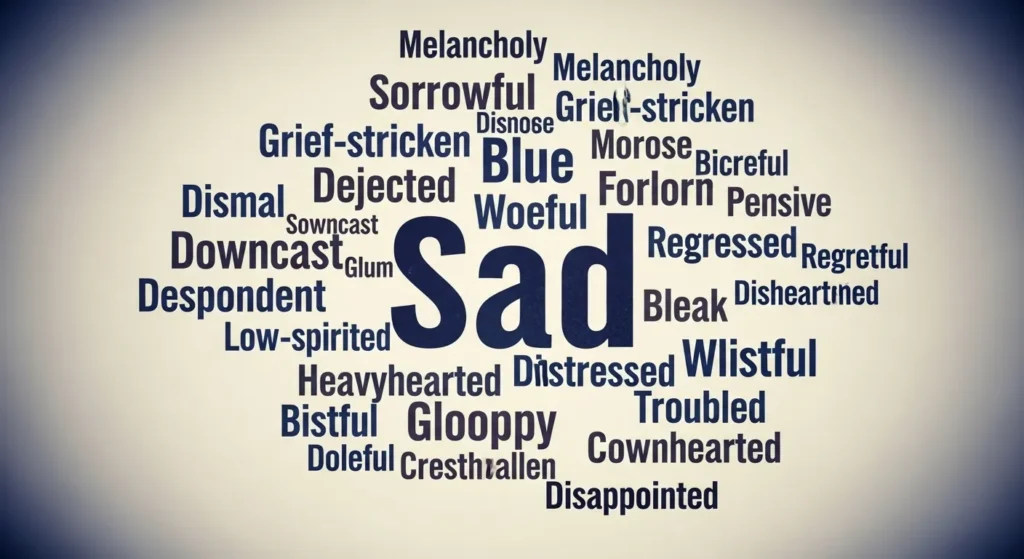
For students, bloggers, storytellers, content writers, and daily English users, learning synonyms of sad helps you express feelings more clearly, more deeply, and more naturally. Whether you’re writing an essay, a story, a message, or a blog, the right word can make readers feel what you feel. Let’s explore 30 powerful alternatives to “sad”.
Sad (adjective):
Feeling unhappy, sorrowful, or down because of loss, disappointment, or difficult circumstances.
Simple examples:
- She felt sad when her friend moved away.
- It’s sad to hear such bad news.
1. Unhappy
Meaning: Feeling displeased or not content.
Examples:
- She felt unhappy about the results.
- He looked unhappy after the meeting.
2. Sorrowful
Meaning: Feeling deep sadness or grief.
Examples:
- The family was sorrowful after the loss.
- She gave a sorrowful smile.
3. Depressed
Meaning: Feeling very low or hopeless.
Examples:
- He felt depressed after losing his job.
- The news left her depressed.
4. Downhearted
Meaning: Feeling discouraged or disappointed.
Examples:
- She was downhearted after the rejection.
- He felt downhearted but didn’t give up.
5. Miserable
Meaning: Extremely unhappy or uncomfortable.
Examples:
- He felt miserable all day.
- The rainy weather made her miserable.
6. Heartbroken
Meaning: Deeply hurt emotionally.
Examples:
- She was heartbroken after the breakup.
- The loss left him heartbroken.
7. Gloomy
Meaning: Feeling dark or unhappy.
Examples:
- He felt gloomy all morning.
- The gloomy weather matched her mood.
8. Melancholy
Meaning: Quiet and thoughtful sadness.
Examples:
- A sense of melancholy filled the room.
- The song sounded melancholy.
9. Dejected
Meaning: Sad because of failure or rejection.
Examples:
- He looked dejected after the interview.
- She felt dejected by the criticism.
10. Low
Meaning: Feeling emotionally down.
Examples:
- I’m feeling low today.
- She felt low after the argument.
11. Tearful
Meaning: Close to crying.
Examples:
- She became tearful while speaking.
- The movie made him tearful.
12. Blue
Meaning: Feeling sad or depressed (informal).
Examples:
- He’s been feeling blue lately.
- Rainy days make her feel blue.
13. Grief-Stricken
Meaning: Overwhelmed by grief.
Examples:
- The parents were grief-stricken.
- He looked grief-stricken at the funeral.
14. Woeful
Meaning: Full of sorrow or misery.
Examples:
- She gave a woeful expression.
- His voice sounded woeful.
15. Crestfallen
Meaning: Suddenly disappointed or sad.
Examples:
- He looked crestfallen after hearing the news.
- She felt crestfallen by the decision.
16. Mournful
Meaning: Showing deep sadness.
Examples:
- The music was mournful.
- He spoke in a mournful tone.
17. Broken-hearted
Meaning: Deep emotional pain.
Examples:
- She felt broken-hearted.
- The story left readers broken-hearted.
18. Despairing
Meaning: Feeling no hope.
Examples:
- He felt despairing about the future.
- Her voice sounded despairing.
19. Glum
Meaning: Quietly unhappy.
Examples:
- He sat there looking glum.
- She felt glum all evening.
20. Dismal
Meaning: Very sad or depressing.
Examples:
- The mood was dismal.
- It was a dismal day.
21. Regretful
Meaning: Sad because of regret.
Examples:
- She felt regretful about her words.
- His tone sounded regretful.
22. Pained
Meaning: Showing emotional hurt.
Examples:
- He gave a pained expression.
- Her eyes looked pained.
23. Disheartened
Meaning: Losing hope or confidence.
Examples:
- He felt disheartened after failing.
- She became disheartened by criticism.
24. Lonesome
Meaning: Sad due to loneliness.
Examples:
- He felt lonesome in the new city.
- Nights made her feel lonesome.
25. Somber
Meaning: Serious and sad in mood.
Examples:
- The ceremony was somber.
- His voice turned somber.
26. Heavy-hearted
Meaning: Feeling emotional sadness.
Examples:
- She walked away heavy-hearted.
- He felt heavy-hearted after goodbye.
27. Anguished
Meaning: Experiencing intense pain or sadness.
Examples:
- She cried in anguish.
- His face looked anguished.
28. Forlorn
Meaning: Sad and lonely.
Examples:
- He gave a forlorn look.
- The abandoned house looked forlorn.
29. Distressed
Meaning: Upset or worried deeply.
Examples:
- She was distressed by the news.
- He looked distressed and confused.
30. Broken
Meaning: Emotionally damaged or hurt.
Examples:
- He felt broken after the loss.
- She sounded broken while speaking.
Conclusion
Learning synonyms of sad helps you express emotions with depth and clarity. Instead of repeating one word, you can choose unhappy, heartbroken, gloomy, melancholy, or distressed to match the exact feeling. This makes your writing more powerful, emotional, and real. Whether you’re writing stories, essays, blogs, or messages, strong emotional vocabulary connects better with readers. Practice these words daily, and your English will feel more natural and expressive.
Suggested Internal Links

Im Noah Bennett.I write practical synonym guides to help readers choose the right words. My goal is to make English vocabulary clear, accurate, and useful for everyday writing.