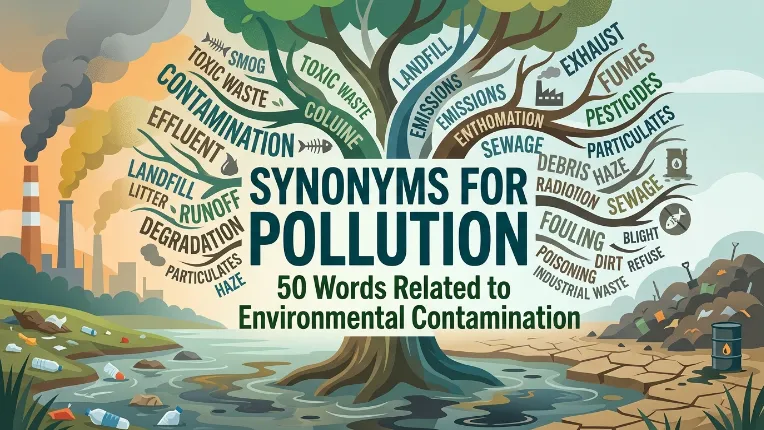
Pollution means making the air, water, or land dirty and harmful because of waste, chemicals, smoke, or other dangerous substances.
Have you ever walked outside and noticed thick smoke in the air or dirty water flowing in a nearby river? Many people see this problem every day in busy cities. One morning, a student on the way to school noticed the sky looked gray instead of blue. Cars, factories, and burning trash had filled the air with smoke. That moment helped him understand how serious pollution can be.
The word pollution means making air, water, or land dirty and harmful. It happens when waste, chemicals, smoke, or plastic enter the environment. For students, bloggers, content writers, and everyday English users, learning synonyms for pollution is helpful. It allows them to explain environmental problems more clearly in essays, blogs, reports, and conversations. Using different words also makes writing stronger and avoids repeating the same term again and again.
Contamination
Meaning: When something becomes dirty or unsafe because of harmful substances.
Examples:
- The factory caused water contamination in the river.
- Food contamination can make people sick.
Impurity
Meaning: Something that makes air, water, or material dirty.
Examples:
- The filter removes impurity from drinking water.
- Smoke adds impurity to the air.
Defilement
Meaning: The act of making something dirty or unclean.
Examples:
- The defilement of the lake worried the villagers.
- Trash caused defilement of the park.
Fouling
Meaning: Making something dirty or polluted.
Examples:
- Oil spills are fouling the ocean water.
- The smoke is fouling the air.
Taint
Meaning: A small amount of pollution that spoils something.
Examples:
- Chemical waste left a taint in the soil.
- The river had a taint of oil.
Corruption
Meaning: Damage or decay that makes something harmful.
Examples:
- Industrial waste caused corruption of the water.
- Pollution led to corruption of the soil.
Spoilage
Meaning: When something becomes bad or unusable.
Examples:
- Air pollution causes spoilage of crops.
- Waste leads to spoilage of natural land.
Degradation
Meaning: Damage that makes the environment worse.
Examples:
- Pollution caused environmental degradation.
- Forest degradation harms wildlife.
Toxicity
Meaning: The presence of poisonous substances.
Examples:
- High toxicity in water is dangerous.
- The air showed signs of chemical toxicity.
Smog
Meaning: Thick polluted air mixed with smoke and fog.
Examples:
- The city was covered with smog.
- Smog makes breathing difficult.
Filth
Meaning: Extreme dirt or waste.
Examples:
- The beach was covered with filth.
- Filth in the river killed fish.
Waste
Meaning: Unwanted materials that harm the environment.
Examples:
- Plastic waste pollutes oceans.
- Factories produce harmful waste.
Garbage
Meaning: Trash or unwanted materials.
Examples:
- Garbage filled the empty land.
- The river carried floating garbage.
Refuse
Meaning: Waste materials thrown away.
Examples:
- Refuse from homes filled the landfill.
- The river was full of refuse.
Litter
Meaning: Trash scattered in public places.
Examples:
- Litter covered the roadside.
- People should avoid throwing litter.
Industrial Waste
Meaning: Waste produced by factories.
Examples:
- Industrial waste polluted the lake.
- Factories must control industrial waste.
Chemical Waste
Meaning: Harmful chemicals thrown into the environment.
Examples:
- Chemical waste damaged the river.
- The company reduced chemical waste.
Sewage
Meaning: Dirty water from homes and cities.
Examples:
- Sewage entered the river.
- Untreated sewage harms marine life.
Toxic Waste
Meaning: Dangerous waste containing poison.
Examples:
- Toxic waste polluted the land.
- The factory handled toxic waste poorly.
Hazardous Waste
Meaning: Waste that can harm health or nature.
Examples:
- Hazardous waste must be handled carefully.
- The landfill stores hazardous waste.
Contaminant
Meaning: A substance that pollutes something.
Examples:
- Chemicals are common contaminants in water.
- The test found air contaminants.
Pollutant
Meaning: A harmful substance that causes pollution.
Examples:
- Cars release pollutants into the air.
- Factories produce harmful pollutants.
Emission
Meaning: Gas or smoke released into the air.
Examples:
- Car emissions cause air pollution.
- Factories reduced their emissions.
Exhaust
Meaning: Gas released from engines.
Examples:
- Vehicle exhaust pollutes the air.
- The exhaust smell was strong.
Smoke
Meaning: Dirty air produced by burning.
Examples:
- Smoke filled the sky.
- The factory released thick smoke.
Dust
Meaning: Tiny particles that dirty the air.
Examples:
- Construction created heavy dust.
- Dust filled the road.
Grime
Meaning: Thick dirt covering surfaces.
Examples:
- Grime covered the city walls.
- Pollution left grime on buildings.
Soot
Meaning: Black powder from burning fuel.
Examples:
- Soot covered the factory roof.
- Cars left soot in the air.
Sludge
Meaning: Thick dirty waste.
Examples:
- Sludge collected in the river.
- The plant cleaned toxic sludge.
Runoff
Meaning: Polluted water flowing from land.
Examples:
- Farm runoff polluted streams.
- Rain carried runoff into the lake.
Adulteration
Meaning: Making something impure by mixing harmful materials.
Examples:
- Water adulteration is dangerous.
- The river suffered from adulteration.
Soil Contamination
Meaning: Pollution that damages soil.
Examples:
- Chemicals caused soil contamination.
- Farmers worry about soil contamination.
Air Contamination
Meaning: Pollution present in the air.
Examples:
- Air contamination harms lungs.
- Cities struggle with air contamination.
Water Contamination
Meaning: Pollution in water sources.
Examples:
- Water contamination affected the town.
- The test showed water contamination.
Environmental Damage
Meaning: Harm done to nature.
Examples:
- Pollution causes environmental damage.
- The spill created serious environmental damage.
Environmental Harm
Meaning: Damage that hurts ecosystems.
Examples:
- Factories caused environmental harm.
- Pollution leads to environmental harm.
Ecological Damage
Meaning: Harm to plants and animals.
Examples:
- Oil spills cause ecological damage.
- Pollution leads to ecological damage.
Environmental Contamination
Meaning: Pollution affecting the natural world.
Examples:
- The report warned of environmental contamination.
- Mining caused environmental contamination.
Toxic Pollution
Meaning: Pollution caused by poisonous substances.
Examples:
- Toxic pollution harms wildlife.
- The river suffered toxic pollution.
Industrial Pollution
Meaning: Pollution created by factories.
Examples:
- Industrial pollution damaged the river.
- Cities fight industrial pollution.
Plastic Pollution
Meaning: Pollution caused by plastic waste.
Examples:
- Plastic pollution fills oceans.
- Beaches suffer plastic pollution.
Marine Pollution
Meaning: Pollution in seas and oceans.
Examples:
- Ships cause marine pollution.
- Marine pollution kills sea animals.
Noise Pollution
Meaning: Harmful loud sounds in the environment.
Examples:
- Traffic causes noise pollution.
- Cities struggle with noise pollution.
Light Pollution
Meaning: Too much artificial light in the sky.
Examples:
- Light pollution hides the stars.
- Big cities have heavy light pollution.
Radiation Pollution
Meaning: Harm caused by radioactive materials.
Examples:
- Radiation pollution can be deadly.
- Scientists study radiation pollution.
Thermal Pollution
Meaning: Pollution caused by hot water from industries.
Examples:
- Thermal pollution harms fish.
- The plant caused thermal pollution.
Chemical Pollution
Meaning: Pollution from harmful chemicals.
Examples:
- Chemical pollution damages rivers.
- Factories must reduce chemical pollution.
Atmospheric Pollution
Meaning: Pollution present in the air.
Examples:
- Cars increase atmospheric pollution.
- Cities monitor atmospheric pollution.
Environmental Decay
Meaning: Slow damage to nature.
Examples:
- Pollution causes environmental decay.
- Forests suffer environmental decay.
Conclusion
Learning synonyms for pollution helps writers explain environmental problems more clearly and effectively. These words improve essays, blog posts, and daily conversations about nature and environmental issues. Students, bloggers, and content creators can use these alternatives to avoid repeating the same word and to describe environmental damage more accurately. Practicing these words will strengthen vocabulary and help people discuss environmental protection with greater clarity.

Im Noah Bennett.I write practical synonym guides to help readers choose the right words. My goal is to make English vocabulary clear, accurate, and useful for everyday writing.